
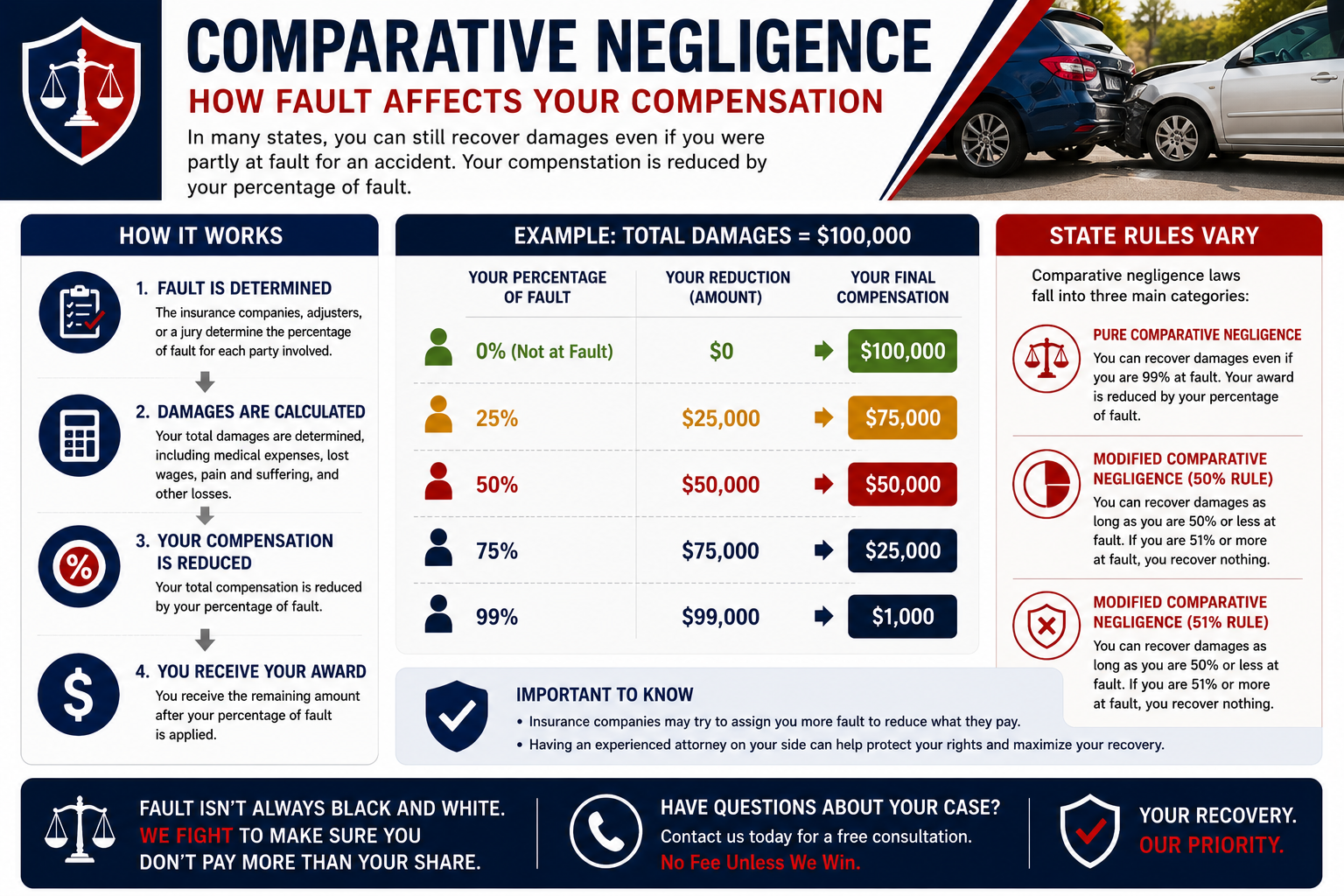
What Is Comparative Negligence
Comparative negligence is a legal principle that allows fault to be divided between parties involved in an accident.
This means:
- You can still recover compensation even if you were partially at fault
- Your percentage of fault may reduce your recovery
- Insurance companies often try to increase your share of fault
How Fault Is Determined
Fault is evaluated using evidence such as:
- Police reports
- Witness statements
- Traffic camera footage
- Expert accident reconstruction
- Medical records
How Shared Fault Affects Compensation
If you are found partially responsible, your compensation may be reduced by your percentage of fault.
For example:
- If you are 20 percent at fault
- And your damages total $100,000
- Your recovery may be reduced to $80,000
Protecting Yourself From Unfair Blame
To protect your claim:
- Avoid admitting fault at the scene
- Do not speculate about what happened
- Seek medical treatment promptly
- Consult legal guidance before speaking in detail with insurers
When to Speak With an Attorney
If the insurance company claims you were partially responsible for the accident, speaking with a personal injury attorney can help protect your rights. Legal representation ensures fault is fairly evaluated and that you pursue the maximum compensation available under the law.