
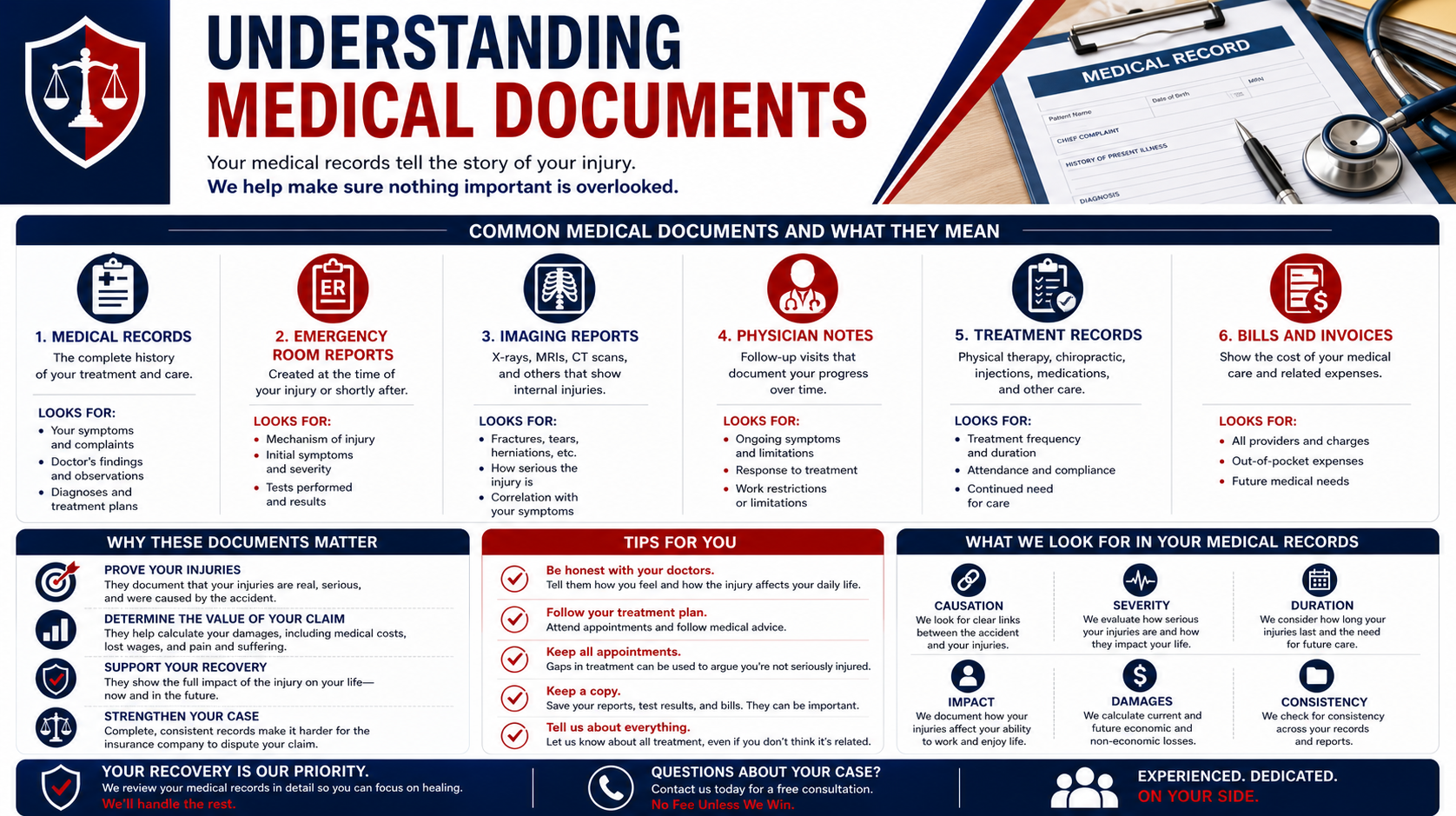
What Medical Records Typically Include
Your medical file may contain:
- Emergency room reports
- Physician notes and diagnoses
- Imaging results such as X-rays or MRIs
- Treatment plans and prescriptions
- Follow-up visit summaries
Why Accurate Documentation Matters
Clear and consistent documentation helps:
- Link your injuries directly to the accident
- Show the progression of your recovery
- Support claims for ongoing treatment
- Prevent insurers from disputing your condition
Understanding Medical Bills and Codes
Medical bills often include complex billing codes and itemized charges. These documents reflect:
- Services provided
- Treatment costs
- Insurance adjustments
- Outstanding balances
Keeping Organized Records
Maintaining your own file can be helpful. Consider keeping:
- Copies of all medical records
- Receipts for prescriptions and travel expenses
- Appointment summaries
- Communication with healthcare providers
When to Speak With an Attorney
If you are unsure whether your medical documentation fully supports your claim, speaking with a personal injury attorney can provide clarity. Proper review of your records ensures that no important detail is overlooked and that you pursue the full compensation you deserve.